Bedding materials and care
Inside Suite Sleep’s Washable Wool Bedding: Materials, Care, and Construction
Wool and cotton make a quietly complex pair: one fiber forms the insulating fill, the other creates the fabric shell that holds it. Suite Sleep’s washable wool bedding brings that familiar combination into items designed for practical home care. Knowing how the layers are assembled—and what the care label actually permits—can help you keep wool bedding comfortable without putting its loft or structure at unnecessary risk.
Published October 24, 2026
A natural fiber, engineered for the bed
Wool begins as a fleece, but bedding transforms it through sorting, cleaning, carding, and assembly into a soft, springy layer. Its fibers have a naturally crimped structure, creating small spaces that can hold still air. That structure helps explain wool’s insulating character: it can provide warmth without requiring a dense, rigid mass of filling. Wool can also absorb moisture vapor, a property that contributes to its reputation for helping bedding feel less clammy than some less breathable constructions.
These are material characteristics, not a guarantee that every sleeper will feel cool or warm in the same way. Room temperature, humidity, sleepwear, mattress construction, and personal comfort all influence the experience. A wool comforter may support a more balanced sleep climate, but it cannot control the bedroom environment by itself.
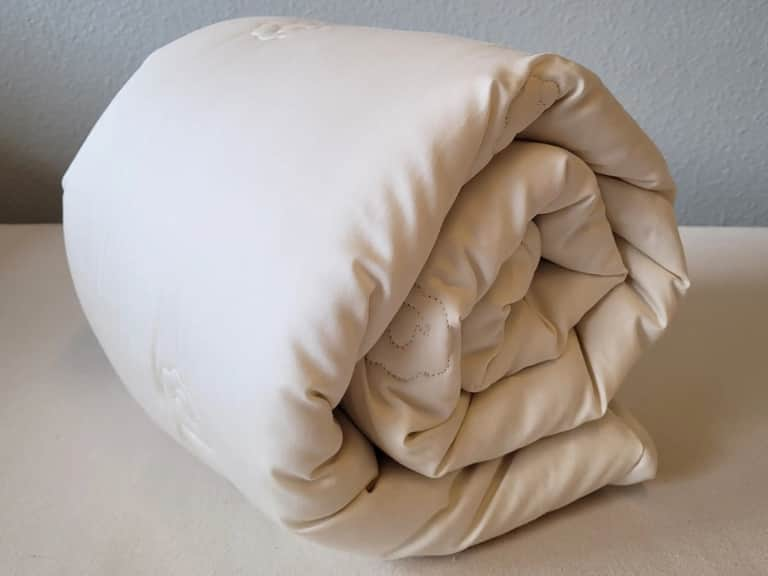
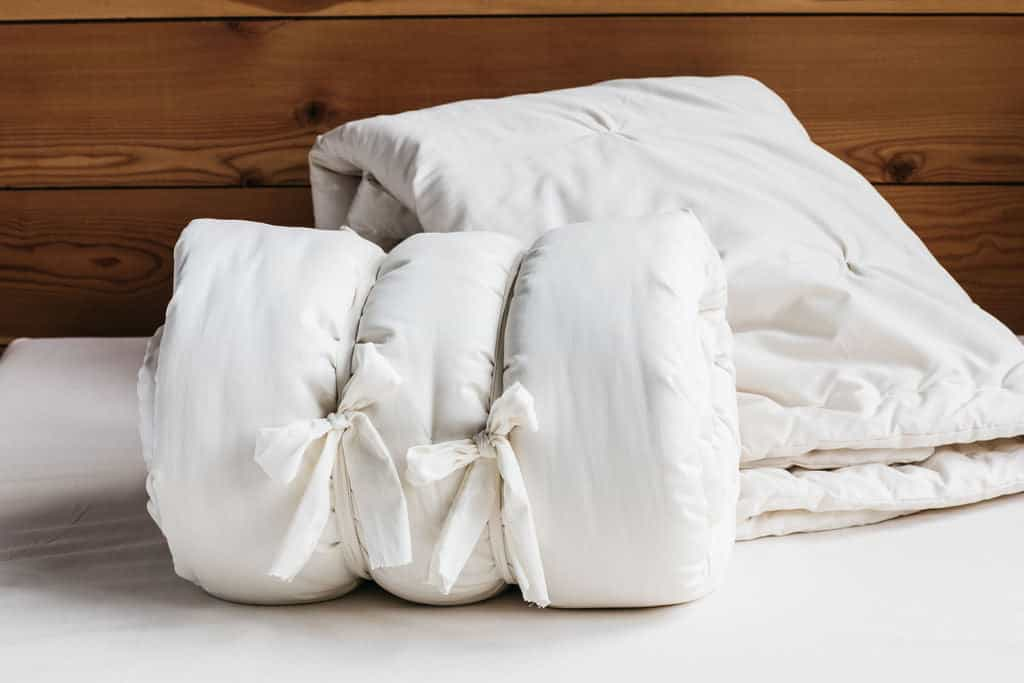
In Suite Sleep’s washable wool bedding, the wool fill is paired with an organic cotton cover. The product information for its washable comforter describes super-washed wool inside an organic cotton sateen shell, quilted to help keep the filling distributed. Its washable mattress pad uses super-washed wool beneath organic cotton on both the upper and lower surfaces. Those details matter: the fiber, shell, quilting, and seams together determine how an item behaves in use and how it should be maintained.
For a closer look at the comforter’s stated materials and care details, see Suite Sleep’s washable wool comforter. The corresponding washable wool mattress pad has its own construction and instructions. The word “washable” is useful, but it is not a substitute for reading the care guidance for the exact item.
Why wool and organic cotton are used together
Wool and cotton have different jobs in a bedding assembly. Wool generally supplies loft and insulation. Cotton forms a woven enclosure that contains the filling, provides the surface that touches other bedding, and gives manufacturers a stable fabric to quilt or stitch. In the washable comforter described by Suite Sleep, the cover is organic cotton sateen; the mattress pad is described as having organic cotton on both sides.
Sateen is a weaving structure, not a fiber. Cotton sateen is typically smooth to the touch and can have a gentle sheen, while cotton percale has a different, often crisper feel. Neither weave alone tells you how warm an item will be or how it should be laundered. Thread count, yarn, finishing, quilting, and the thickness of the wool layer all play a part.
Likewise, “organic” describes a sourcing or certification standard, not a care method. If an item carries a certification, consult the product documentation to see exactly which materials and processes are covered. A certified fiber can still require careful washing, and a natural material is not automatically immune to shrinkage, distortion, or wear.
The cotton shell is important because wool fill is not simply loose fiber floating inside the bedding. It is held within a textile envelope and, in quilted designs, secured at intervals by stitching. A shell that is strained by aggressive agitation or high heat may pucker or distort. If the quilting is damaged, the wool could shift or form uneven areas. Care is therefore about preserving the entire construction, not just cleaning the visible surface.
What quilting contributes
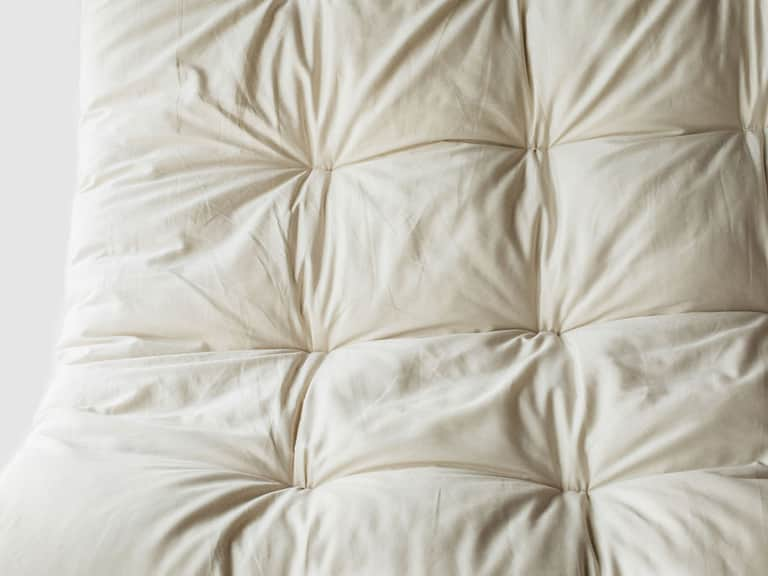
Quilting connects layers through repeated lines or patterns of stitching. In bedding filled with wool, this helps restrain the batting so it is less likely to migrate into one corner or settle into a single thick ridge. Suite Sleep describes its washable comforter as quilted to keep the wool in place and prevent clumping. The mattress pad’s fitted shape serves a different function: it is intended to stay in position over the mattress, with deep pockets described as fitting mattresses up to 18 inches.
Construction influences how a piece responds to both nightly use and cleaning. A compact, quilted comforter is not maintained in quite the same way as a loose wool duvet insert, an unquilted topper, or a pillow with removable filling. The seams, dimensions, weight, and size of a household washing machine can all affect whether laundering is suitable. Even when a manufacturer permits machine washing, an oversized item may not move freely in a small drum.
That is why the care label and item-specific instructions take precedence over generic advice about wool. A washable wool pad and a washable wool comforter may share some materials but differ in their size, layering, and construction. Treat each object as its own textile system.
Before washing: check the item, not just the fiber
Before placing bedding in water, identify the exact item and read its care label or manufacturer’s care guide. Confirm whether the whole item is machine washable, what temperature is allowed, which cycle is specified, and whether tumble drying is permitted. Check for instructions about detergent, bleach, fabric softener, soaking, or drying flat. These details can differ even among products made with wool and cotton.
For the Suite Sleep washable comforter, the supplied care guidance calls for a gentle cycle in a front-loading washer and cold water. It advises air-drying in the sun or tumble-drying on a low setting until the comforter is almost dry, then finishing the drying flat to help prevent clumping and felting. The washable mattress pad’s guidance also specifies cold-water machine washing, with natural detergent, and allows low tumble drying or hanging to dry. Always check the item’s current label, since instructions supplied with the specific bedding should govern.
A short pre-wash inspection can prevent avoidable trouble:
- Check seams, quilting, and the shell for openings or damaged stitching.
- Close zippers, fasteners, or other closures if the item has them.
- Make sure the washer has enough capacity for the bedding to move freely.
- Use the water temperature and cycle stated for that particular product.
- Choose a detergent compatible with the label; avoid bleach unless expressly permitted.
- Wash the item separately when needed to prevent abrasion or overloading.
A front-loading washer is specifically recommended for Suite Sleep’s washable comforter. If you have a top-loading machine with an agitator, do not assume it is suitable simply because the item fits inside. Contact the manufacturer or follow the written product instructions if the machine type is not addressed.
Washing gently protects the wool’s structure
Wool fibers can felt when conditions combine moisture, heat, and mechanical agitation. Felting occurs as fibers interlock more tightly, which can make a textile feel denser and may reduce its original loft. “Super-washed” wool is processed to improve washability, but that description does not mean it can withstand any temperature, cycle, or drying method. The manufacturer’s instructions remain essential.
Use cold water when the product guide specifies it. A gentle cycle reduces the force placed on seams and batting compared with a vigorous wash. Avoid unnecessary repeated laundering: everyday dust and brief use do not necessarily require a full wash, and each wash puts some mechanical stress on bedding. A removable duvet cover on a comforter can act as a washable outer layer and reduce how often the comforter itself needs attention.
Do not improvise by soaking a comforter for a long period or adding extra agitation to address a small mark. If a spot is limited, local cleaning may be a more measured first step, provided it is compatible with the care instructions. Blot rather than scrub, using a clean cloth and a mild approach. Test any cleaning method in an inconspicuous area when appropriate, and allow the fabric to dry fully.
Overloading is another common risk. A wet comforter becomes heavier, and a tightly packed drum can prevent even rinsing and place strain on the item. If the bedding cannot move freely, use a suitable larger-capacity machine or seek guidance from the manufacturer rather than forcing it into an undersized washer.
Drying is part of the care process
After washing, support the bedding as you remove it. Wet wool fill is heavier than dry fill, so lifting a comforter by one corner can put unnecessary stress on stitching. Keep the item supported as much as possible and avoid wringing or twisting it. Then follow the product’s stated drying method.
Suite Sleep’s washable comforter instructions allow air-drying in the sun or low-heat tumble-drying until almost dry, followed by flat drying. This sequence is intended to limit the risk of clumping or felting while ensuring the interior is not left damp. The mattress pad instructions allow low tumble drying or hanging to dry. These are product-specific directions, not universal rules for every wool textile.
When drying flat, spread the bedding over a clean surface with good air circulation and turn or reposition it as needed. Do not put it away while any section still feels damp. Lingering moisture can create an unpleasant odor and may damage textile materials over time. If you use a dryer, select only the heat setting permitted by the label and check progress rather than running repeated hot cycles.
Sun and fresh air can also be useful for routine refreshing, but strong, prolonged direct exposure may not suit every shell or finish. Follow the item’s guidance and avoid leaving bedding outdoors where it could become wet, dusty, or exposed to pests. Airing is not a replacement for washing when a textile needs cleaning, nor does it correct a spill that has penetrated the fabric.
When spot cleaning or airing is preferable
Wool bedding often benefits from thoughtful, less frequent cleaning. If the item has only been used normally and remains fresh, airing it can help release everyday odors without putting it through a wash. A duvet cover, fitted sheet, or washable protector can take much of the regular contact and be laundered more often than the wool-filled layer.
For a small spill, act promptly. Blot liquid with an absorbent cloth, working from the outside of the mark toward the center to avoid spreading it. Do not rub forcefully, which can push soil deeper or roughen the surface. Use only a cleaning solution permitted by the product instructions. Apply moisture sparingly and let the area dry completely before covering or storing the bedding.
For a large spill, persistent odor, or stain that reaches the filling, consult the care guide before deciding on a wash. Some wool bedding is washable only under specific conditions, while other wool-filled items are intended for spot cleaning or professional care. The product category is not enough to determine the method: the label on the individual item is the reliable reference.
What to expect from wool over time
Wool has a recognizable natural scent, which some people notice when bedding is first unpacked. Such a scent may soften as the item is aired, but responses vary. A persistent strong or unusual smell, especially after the bedding has been aired and fully dried, deserves attention rather than being dismissed as a normal feature. Check the manufacturer’s guidance.
Loft can also change gradually with use. Gentle shaking, airing, and following recommended drying instructions can help maintain an even feel, while quilting helps keep the fill distributed. If you notice a sudden lump, a bare patch, a torn seam, or a damp area that will not dry, pause use and inspect the item. Avoid pulling at the quilting or trying to redistribute the filling through a small opening; contact the maker for suitable repair or care advice.
Storage matters between seasons. Put bedding away only when it is clean and completely dry. A sealed, clean container or breathable storage bag can help protect it from dust and pests. Avoid compressing wool bedding for long periods if that would flatten its loft, and keep it away from damp basements, heat sources, and direct sunlight. Follow any storage instructions supplied with the product.
A practical checklist for washable wool bedding
Good wool care is less about frequent intervention than about matching the method to the construction. Keep this short checklist near the laundry area:
- Identify the item. Confirm whether you are washing a comforter, mattress pad, pillow, or another wool-filled textile.
- Read its label. Check temperature, cycle, detergent, and drying directions for that exact piece.
- Inspect before washing. Look for weak seams, tears, and loose quilting.
- Use adequate capacity. The item should have room to move through the wash and rinse.
- Keep the process gentle. Follow the stated cycle and avoid unapproved heat, bleach, or extra agitation.
- Dry thoroughly. Check the center and thicker areas before making the bed or storing the item.
- Refresh between washes. Use a cover, spot-clean small marks when permitted, and air the bedding as appropriate.
The useful lesson in “washable”
Washable wool bedding brings together a material valued for its insulating, moisture-managing structure and a construction designed for a degree of home maintenance. In Suite Sleep’s examples, super-washed wool is paired with organic cotton, and quilting helps hold the fill in place. The comforter and mattress pad have care guidance that includes cold water and gentle handling, with drying details tailored to each item.
The most important word is not only “washable,” but “instructions.” A fiber’s reputation cannot replace the product label, and a method that suits one comforter may not suit another wool layer. By checking the materials, construction, washer capacity, and drying requirements before cleaning, you can make practical care decisions while giving the bedding a better chance of retaining its shape and comfort.
Frequently asked questions
Can all wool bedding go in a washing machine?
No. Some wool bedding is designed for machine washing, while other items require spot cleaning, airing, or professional care. Follow the instructions for the specific product rather than relying on the words “wool” or “washable” alone.
Does super-washed wool need special care?
It still needs the care method stated by its manufacturer. Super-washing describes processing intended to improve washability; it does not make wool immune to excess heat, harsh agitation, or unsuitable drying.
Why does quilting matter in a wool comforter?
Quilting helps secure the wool fill at intervals, supporting more even distribution. Maintaining the stitching and shell helps preserve the comforter’s intended construction.
How often should wool bedding be washed?
There is no single schedule for every household or item. Use a protective cover, air the bedding when appropriate, spot-clean minor marks if permitted, and wash when needed according to the product’s care guide.